
RAW drive – why not confirm formatting and what does it mean?
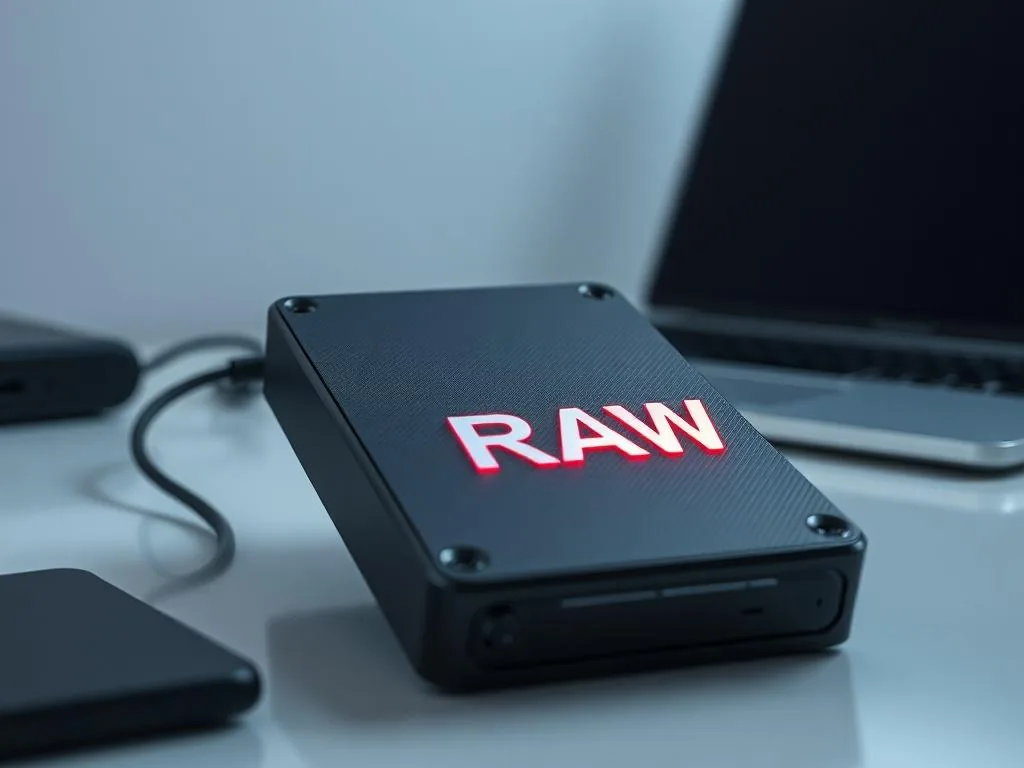
The RAW message usually means that the system sees a storage device, but cannot read the data structure correctly. This could be the result of damage to the file system, sector errors, abrupt disk disconnection or problems with electronics and system software. The message itself does not mean that the data is lost, but that any hasty operation can change the structures needed for recovery.
The dangerous moment is the first prompt: "You need to format the disk before you can use it." Formatting is meant to make the drive usable again, not to recover your data. If the disk holds the only copy of documents, photos or company files, click Cancel and stop writes to the device.
Use this quick symptom, risk and safe-step map before you click anything.
RAW disk? Don't format it. The same RAW label does not mean the same failure on every device. On an HDD it may be a weak sector near the file-system metadata. On an SSD it may involve controller state, TRIM or firmware. On an external USB drive the enclosure or bridge board can be the weak point, even if the disk inside is still readable.
RAW on HDD, SSD and external USB drives
This is why the first diagnosis should identify the device type, connection path and behaviour under power. A Warsaw company archive on a USB HDD, an NVMe from a business laptop and a camera card with RAW symptoms need different handling.
If you do not know which category you are dealing with, start with the right path:
Why a drive suddenly becomes RAW
Most of the time, a broken file system is guilty, but it's just a symptom. The source may be:
- weak sectors can make the file system unreadable.
- failure after power loss or hard reboot,
- cable, enclosure, bridge board and power may be involved.
- damage to system software or storage device electronics.
Therefore, RAW must be considered not as a "format to change", but as warning signalthat you must first understand the source of the problem.
RAW is a symptom, not a repair instruction
- Do not click "Format" — Even a fast format can make it difficult to recover logically.
- Do not initialise the disk in Disk Management.
- Do not run CHKDSK, "repair disk" or random partition-fix tools on the original.
- Do not save recovered files back to the RAW device.
What to do safely step by step
- Stop working on the storage device and disconnect it if each subsequent plug causes the same symptoms.
- Check only the external elements: another cable, another port, or the power supply of the housing — without making records.
- Try another cable or port only if the device is stable and quiet.
- Stop if the drive clicks, slows badly, disappears or blocks the computer.
With read error media, the safest path is usually through sector-by-sector imaging and copy work, rather than the original. This is particularly important when RAW appeared after a power failure or when the disk began to operate slowly and unstably.
When the situation is urgent
If disk:
- The drive disappears from the system or BIOS/UEFI.
- Folders open very slowly or freeze Windows Explorer.
- The disk makes unusual sounds or repeatedly reconnects.
- The computer hangs whenever you try to open the partition.
Tools such as DMDE, R-Studio or Recuva are not automatically unsafe, but the safe professional approach is to work from a sector image. Scanning the original drive when it has read errors may push weak sectors harder and make later imaging more difficult.
When RAW becomes time-sensitive
If there are important documents, photographs, company data or only copy of the archive on the disk, do not postpone the decision "for later". The fewer records and fewer failed attempts, the better the starting position for recovery. If necessary, you can go to describe the symptoms for assessment Or see what he looks like data recovery in Warsaw.
When to report the storage device to a laboratory
In a Warsaw business case, also write down whether the drive contains accounting data, project files, encrypted user profiles or a shared archive. That helps choose the priority and the correct diagnostic route.
In the notification it is worth adding a model of the storage device, a type of USB housing, information about the power outage and whether modifying procedures were started. If this is the only copy of the data, the safest way to go is to RAW symptom description instead of testing more tools on the original.
How to prepare a diagnostic request instead of experimenting
RAW state does not always mean only a corrupt filesystem. If the storage device disappears during operation, suspends the system, makes unusual sounds or has unstable capacity, the problem may concern the hardware layer. In such a situation, it is necessary to treat the case more widely than the partition error, and it must not be assumed that the fast format or CHKDSK will restore secure access to data.
See also:
These scenarios often have a common symptom, but a completely different source of the problem.
If the data matters, move to a safe diagnosis path
If the data from the RAW storage device are important, it is better to stop further tests and move on to orderly operation: